
Invasive plants of Laingholm
Click the + symbol to read more and learn how to eradicate these from our environment.
-
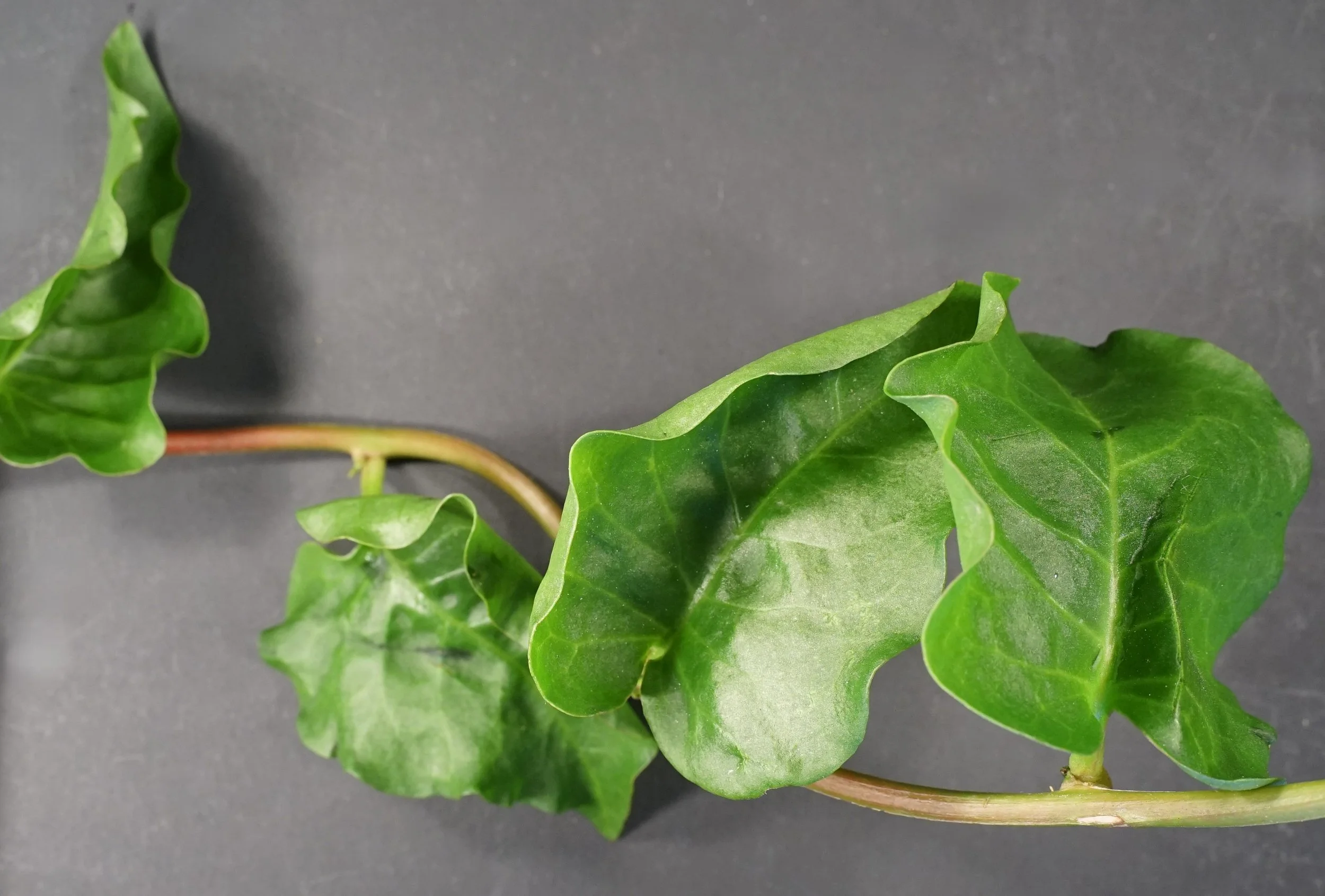
Climbing vine with fleshy rhizomes and slender, usually reddish stems with small irregular ‘warty’ aerial tubers. Fleshy heart-shaped leaves (2-11 cm long) are glossy and clammy to the touch. Produces drooping flowerheads (18 cm long) with many small, fragrant cream flowers. It forms heavy masses of foliage that smother and kill native trees and shrubs. The warty tubers on the stems break off easily and every one of them grows into a new vine.
Tubers are very hard to kill
Control
Hand pull or dig out entire plant. Ensure all plant material is removed from site because all bits of stems will regrow. Dispose of plant pieces in a weed bin or put them in black plastic bags and leave them to cook in the sun.
Cut and paste - Cut the stem as close to the ground as possible and cover the entire stump with herbicide as soon as possible after cutting. Apply either cut ‘n; paste glyphosate gel, metsulfuron gel or picloram gel.
For small plants, spray all foliage with Metsulfuron-methyl 600g/kg (0.3g/L) + Glyphosate 360 (10 ml/L) + Penetrant (1 ml/L).
-
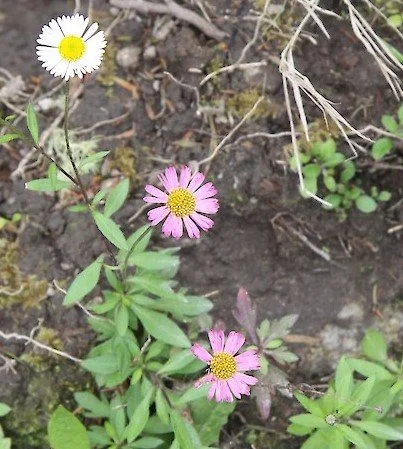
Erect, many-stemmed shrub up to 2m high. Stems are usually purple and have branches in opposite pairs. It has diamond-shaped leaves (5-8 cm) with irregularly round-toothed edges are in opposite pairs along the stems. It produces dense clusters of small, white flowers. It often dies back in winter. It forms dense colonies, smothering native herbs and ferns and preventing native seedling establishment.
Control options:
Dig out small infestations and expose roots.
Spray foliage with glyphosate (360 g/L strength) (mix 20 ml per litre of water and add penetrant).
-
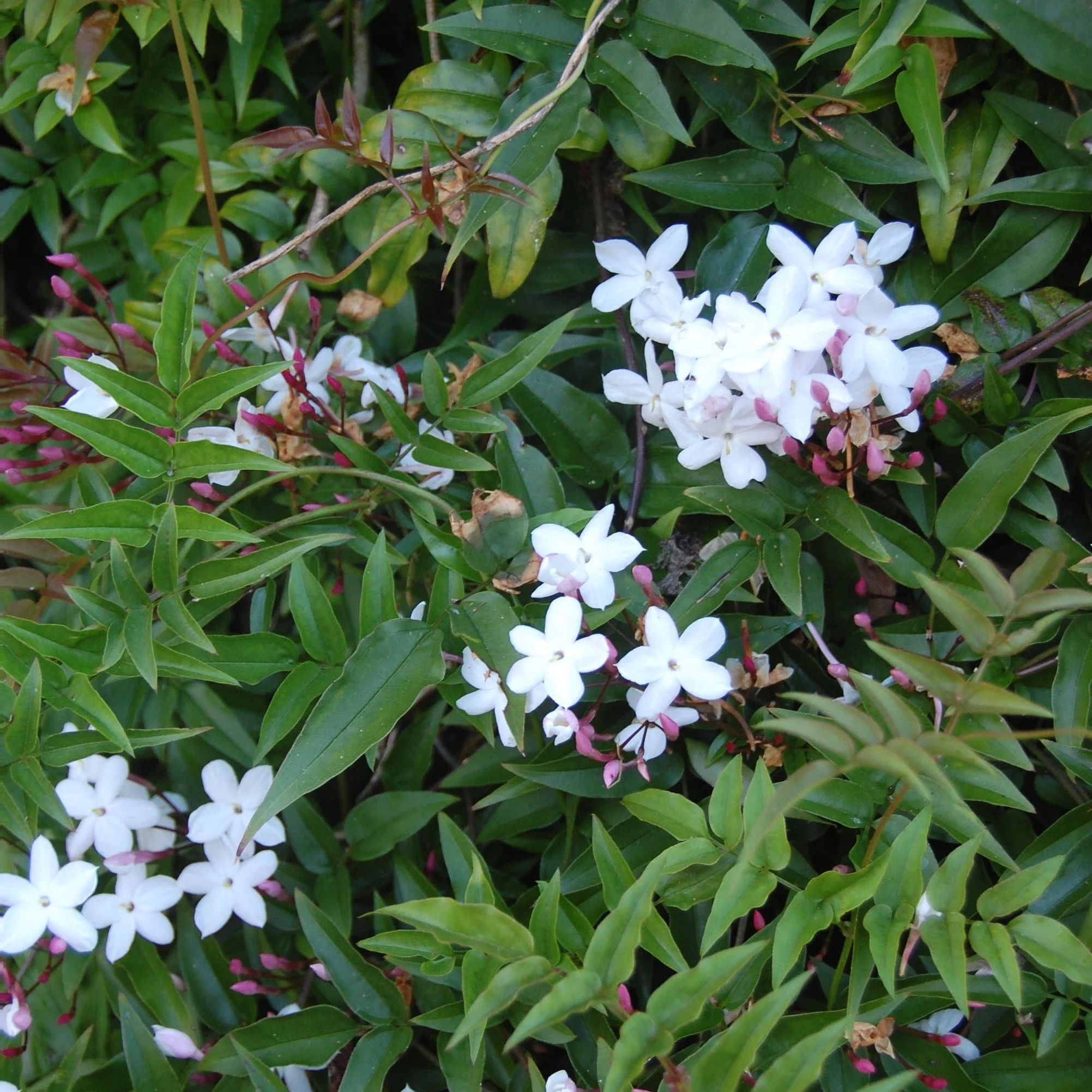
Jasmine may look pretty with sweetly perfumed spring flowers, but it soon become a thick fast-moving mass that will smother and kill anything in its path, including large trees. In Laingholm, it’s not unusual to see it completely blanket large areas of land, and once established, it is hard to kill. The runners travel a long way, under buildings, fences and even rocks, and it thrives in shade or full sun in dry or wet conditions. Once established, it becomes impossible to remove by hand and you will need to use herbicide.
Control options:
Cut vines away from trees so as to give the trees a chance to survive and either cut and paste cut stems with Metsulfuron-methyl METGEL CUT “N” PASTE , or other ‘woody weed’ herbicide or just spray foliage of the regrowth – note it only takes a few weeks until cut jasmine gets back into the canopy of trees.
Spray regrowth with Glyphosate (360 g/L strength) (mix 10 ml per litre of water and add penetrant), or spray regrowth with Triclopyr (600g/Kg strength) (mix 6 ml per litre of water and add penetrant).
Burn or deeply bury all cuttings or take them to a transfer station - small pieces left on the ground will regrow.
-
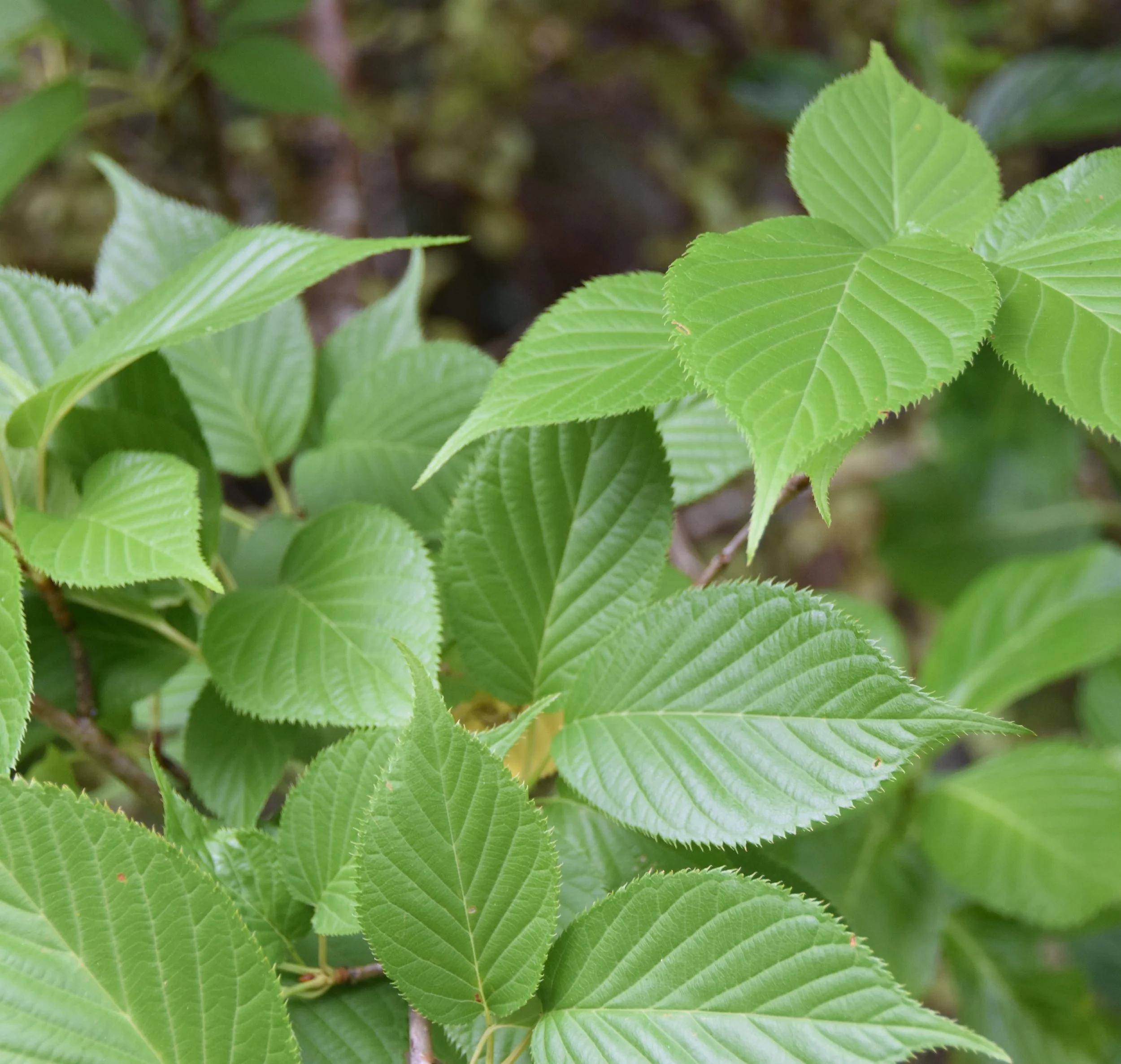
Deciduous tree with narrowly spreading branches (branches nearly vertical when young). The thin leaves are rounded at the base with a sharp point at the tip (usually 6-13 cm long by 2-6 cm wide) and they have small teeth along their margins. The main leaf veins are very obvious. Bell-shaped flowers are magenta or pink to deep red, hang in clusters and are followed by glossy scarlet cherries.
Taiwan Cherry is spread widely by birds, and it forms dense stands that kill off competing native trees and shrubs. People plant it because it looks pretty and because it attracts tui. However, tui survive happily without it, and it is one of the more invasive pests in Laingholm and Titirangi.
Control options:
Pull or dig out small plants and leave on site to rot down.
Cut and paste larger plants immediately after cutting with undiluted glyphosate, or Metsulfuron-methyl METGEL CUT “N” PASTE.
Drill holes of approximately 1 cm diameter and 5 cm deep at a downward angle of about 45 degrees. Drill one hole every 20 cm around the trunk base and fill with undiluted glyphosate, or with metsulfuron-methyl (600g/kg strength) mix 20 g (about 40 ml of granules) per litre of water.
Foliage spray (summer) with glyphosate (360 g/L strength) ) (mix 10 ml per litre of water and add penetrant).
-
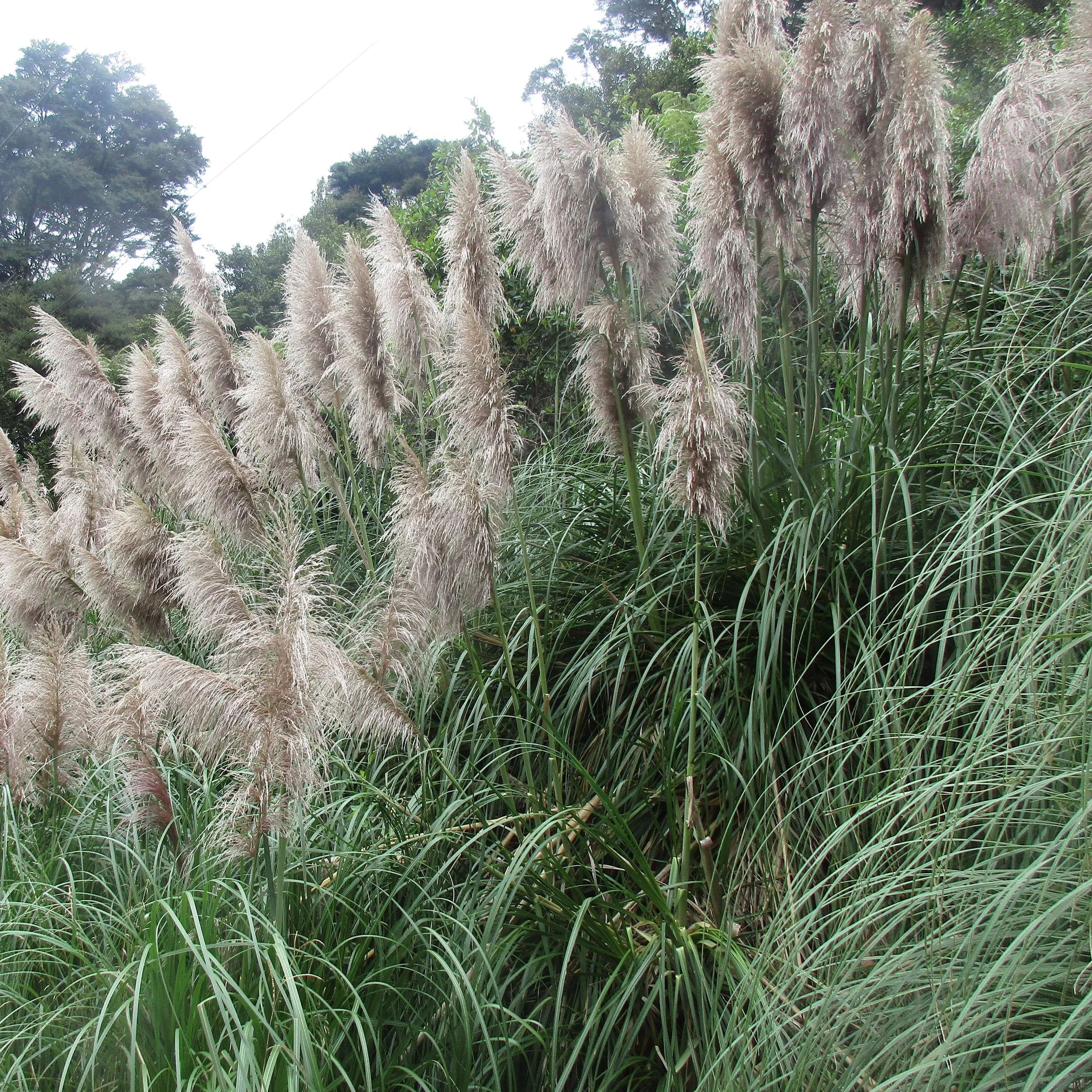
Pampus (sometimes called cutty grass) and our native toe toe are often confused. There are two invasive species (Cortaderia jubata and Cortaderia selloana). There are four native species on mainland New Zealand plus one endemic to the Chatham Islands, but the native species that grows locally is Austroderia fulvida.
Pampus forms large clumps, usually 2-3m high. It can be distinguished from the native species by having one conspicuous leaf midrib, without secondary veins between the midrib and leaf edge ─ all the native species have secondary veins on both sides of the midrib. Pampus also has dead leaf bases that spiral like wood shavings, whereas the native species do not. Pampus has erect, dense, fluffy, white-pinkish flowerheads (January to June) that fade to a grey-white as seed forms. The flowers of the native toe toe vary among the species but the one that grows in the Waitakere Ranges has pendulous graceful flower stalks and light golden-yellow flowerheads (September to January).
Control options:
Dig out small plants.
For large plants, cut them down as close to the base as possible and then spray the stumps with glyphosate (360 g/L strength) (mix 300 ml per litre of water and add penetrant). This method minimises spray drift and is more effective than spraying the leaves.
Spray leaves with glyphosate (360 g/L strength) (mix 10 ml per litre of water and add penetrant).
-
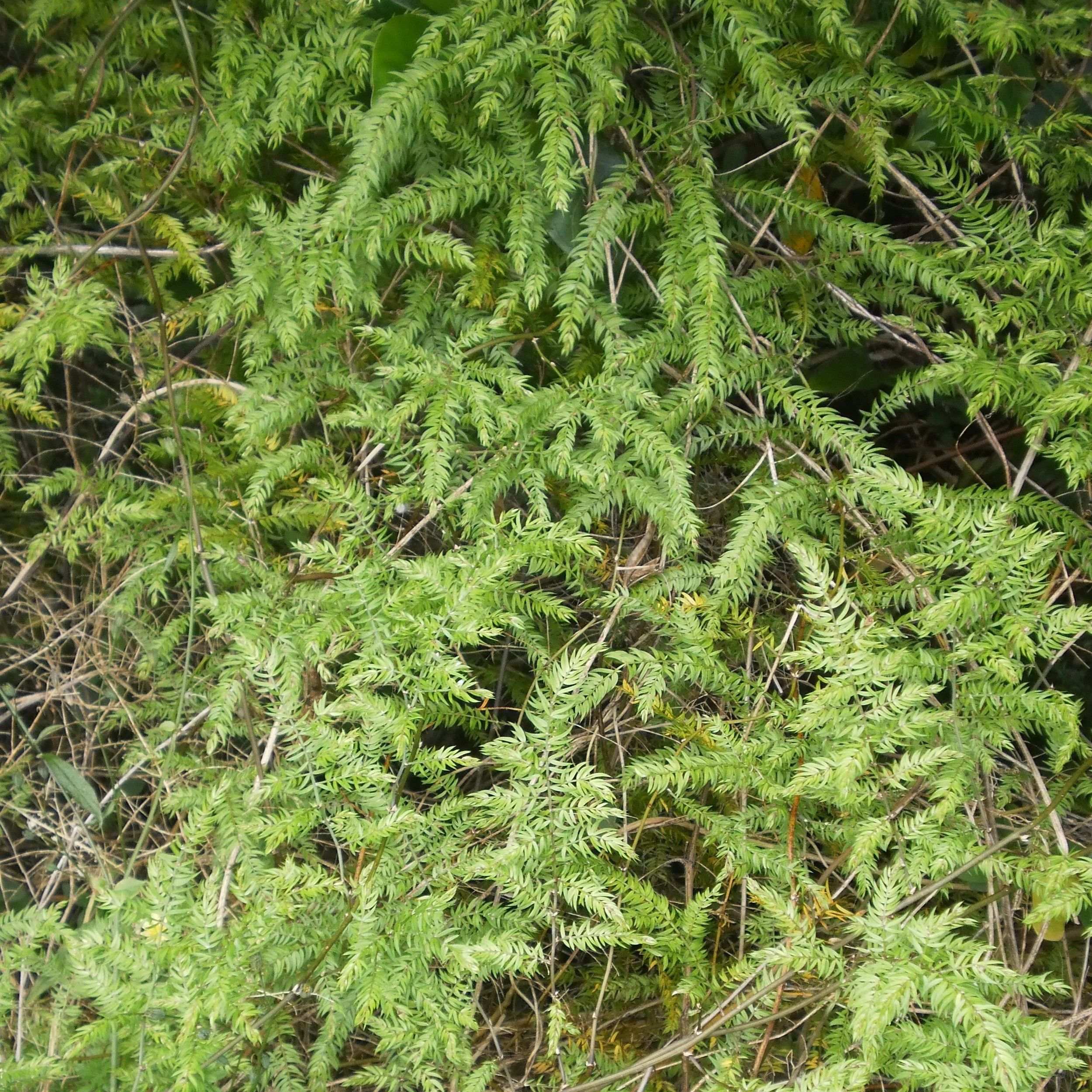
Climbing Asparagus is a slender scrambling and climbing plant with tuberous roots, and long thin, wiry stems (2-4 m long). What look like leaves are actually flat leaf-like stems. Young plants can easily be mistaken for kahikatea seedlings. Climbing Asparagus produces tiny whitish flowers followed by small round berries that ripen from green to orange-red. It is spread widely and rapidly by birds. It forms a continuous layer on the ground and on trees, smothering and killing native plants. It is probably the most serious pest plant in the Waitakere Ranges.
Control options:
Pull up small plants and remove from the site.
Larger plants are difficult to dig out because of their extensive mass of tubular roots; if any bits of this brake off and are left behind the plant rapidly regrows.
Spray foliage with glyphosate (360 g/L strength) (mix 10-15 ml per litre of water or 15-20 ml per litre of water in winter and add penetrant. Most native plants are fairly resilient to Glyphosate at low concentrations but are smothered and killed by Climbing Asparagus and so it is better to get rid of the pest rather than worry too much about damaging native plants while spraying. However, be as careful as possible by pulling the weed off tree trunks and spraying it on the ground if you can. Perhaps best not to use penetrant if spraying against tree trunks or over desirable plants as this will increase the likelihood of off-target damage.
Under construction - more coming soon!
-
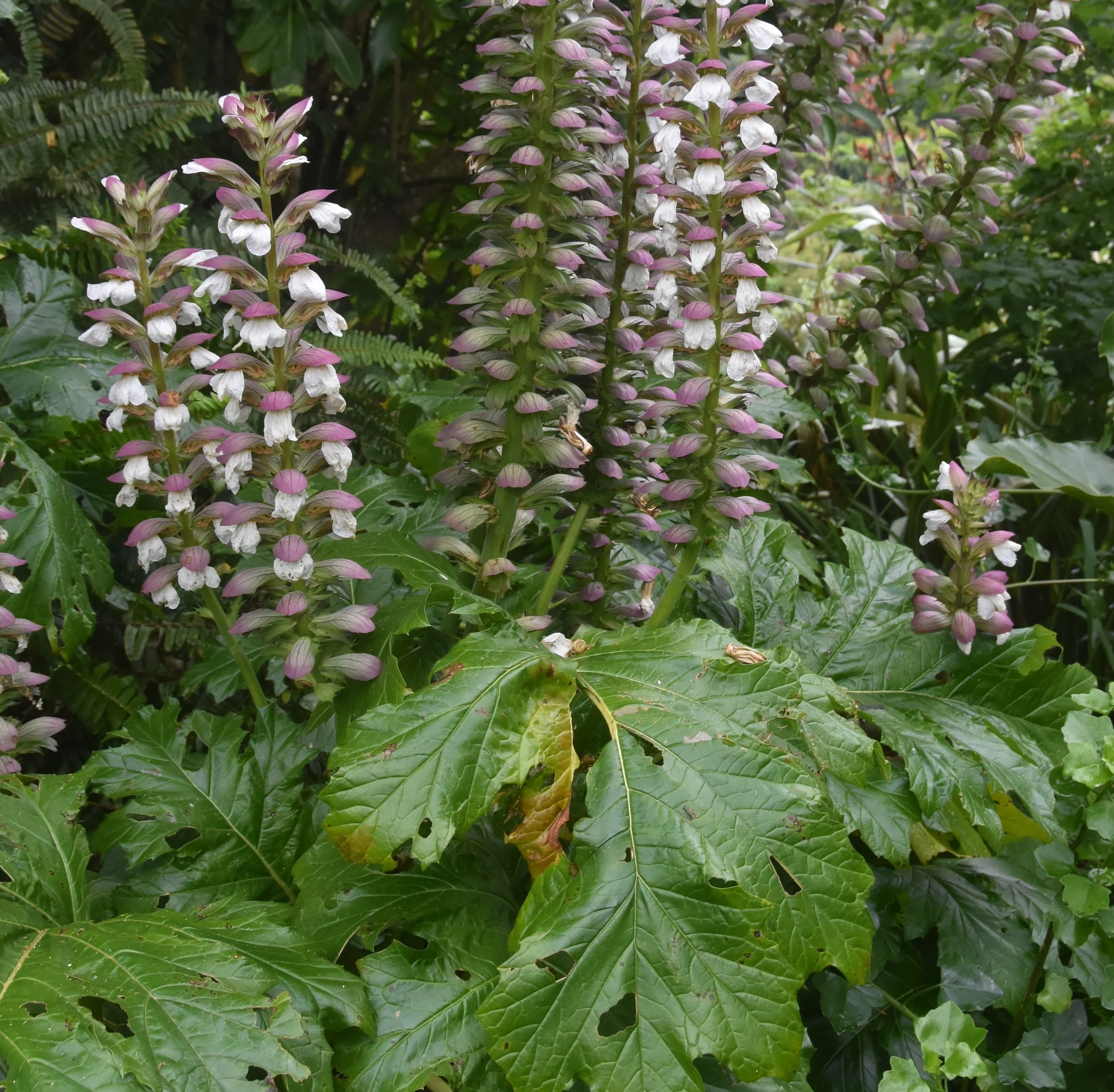
Herb up to 1.5 m high with large, glossy, strongly lobed, dark green leaves (up to 50 x 30 cm) on long leaf stalks up to 50 cm long. Flowers are numerous on tall spikes and are partly tubular with one white petal and a purple hood. It forms large clumps, and spreads rapidly in disturbed ground displacing native plants. Seed is spread by water and birds, and it also spreads by root fragments.
Control options:
Dig out plants, ensure removal of all roots and dispose of roots and seedheads at a refuse transfer station or weed bin. Leaves can be left on site to rot down.
Cut and paste stems with metsulfuron-methyl METGEL CUT “N” PASTE
-
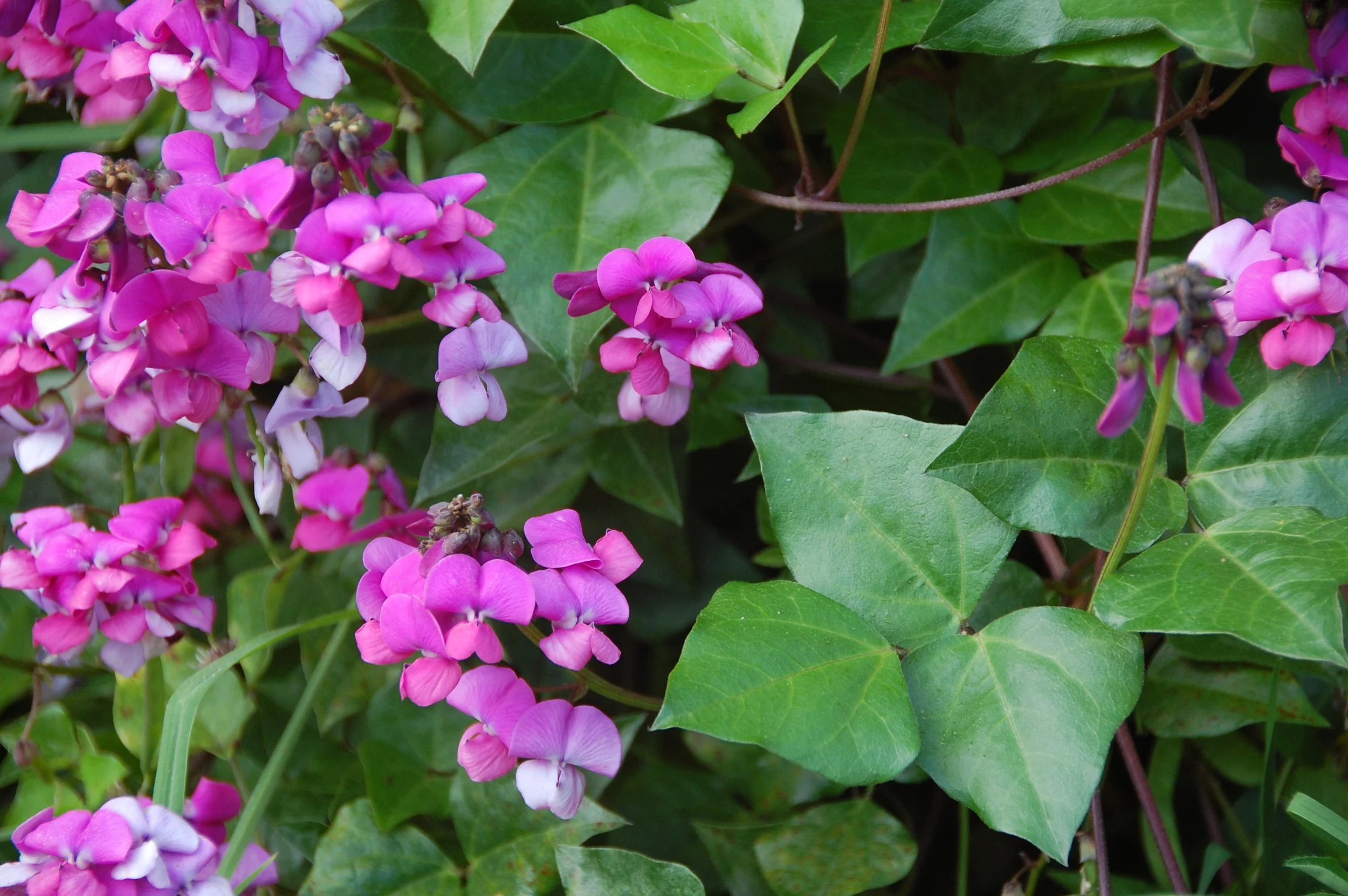
Aggressive climber that smothers and kills most plants from ground level to canopy trees and prevents the establishment of native plant seedlings. Its leaves have three heart-shaped leaflets (2-6 cm long). It produces pea-like lavender, white, pink or reddish-purple flowers that develop into boat-shaped seed pods (3-4 cm long) that split to release the seeds. Seeds spread by birds and by water.
Control options:
Dig out small plants and dispose of at a refuse transfer station or weed bin.
Cut and paint stump with metsulfuron-methyl METGEL CUT “N” PASTE, or picloram cut “n” paste.
Spray (spring-autumn) with metsulfuron-methyl (600 g/kg strength) (mix 0.3 g (approximately 0.6 ml of granules) per litre of water and add penetrant).
-
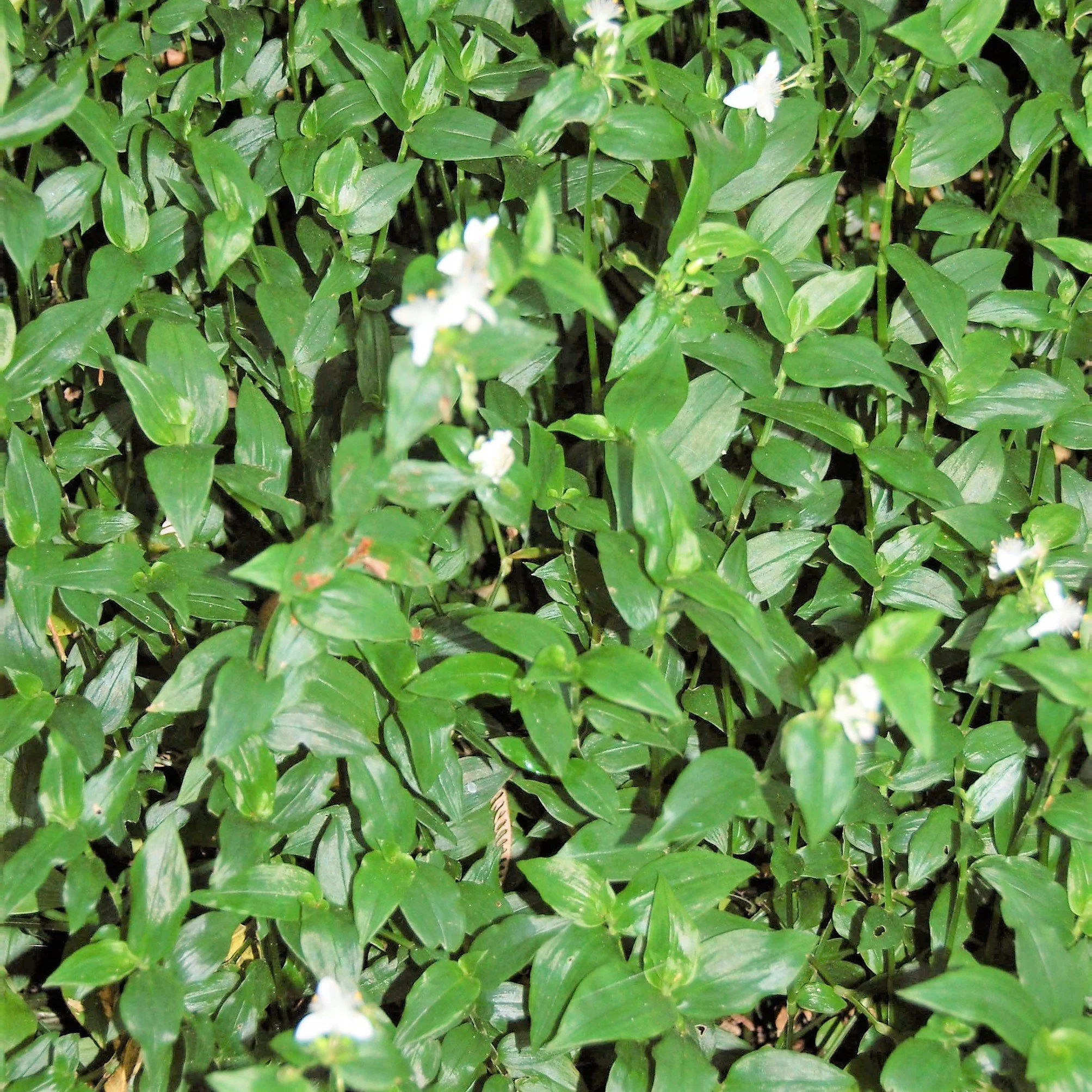
Trailing groundcover with succulent, soft, creeping stems that root at all nodes touching the ground. Dark green, shiny, smooth and fleshy leaves (3-6 cm long) are oval with pointed tips. Variegated and purple leaf cultivars are often sold as indoor plants but if dumped outside or even a small piece breaks off outside it will quickly revert to the green form and smother the ground.
It smothers and kills native seedlings and other small plants such as native herbs and ferns.
Control options:
There are four biocontrol organisms that have been released to control Tradescantia; three beetle species and a fungus. The fungus causes yellow leaf spots, and complements the beetles, particularly in damp areas.
Foliar spray with triclopyr (600 g/L strength) (mix 6 ml per litre of water) and add penetrant. Thoroughly wet all parts of the Tradescantia. Note: Triclopyr will not kill 'grass but overspray will kill other native broadleaf plants. However, some loss of small native plants due to accidental spray cover is better than allowing tradescantia to spread and smother all native ground plants. Follow up within 2-3 months with spot spraying any regrowth. 2-3 treatments are often needed to fully eliminate it.
-
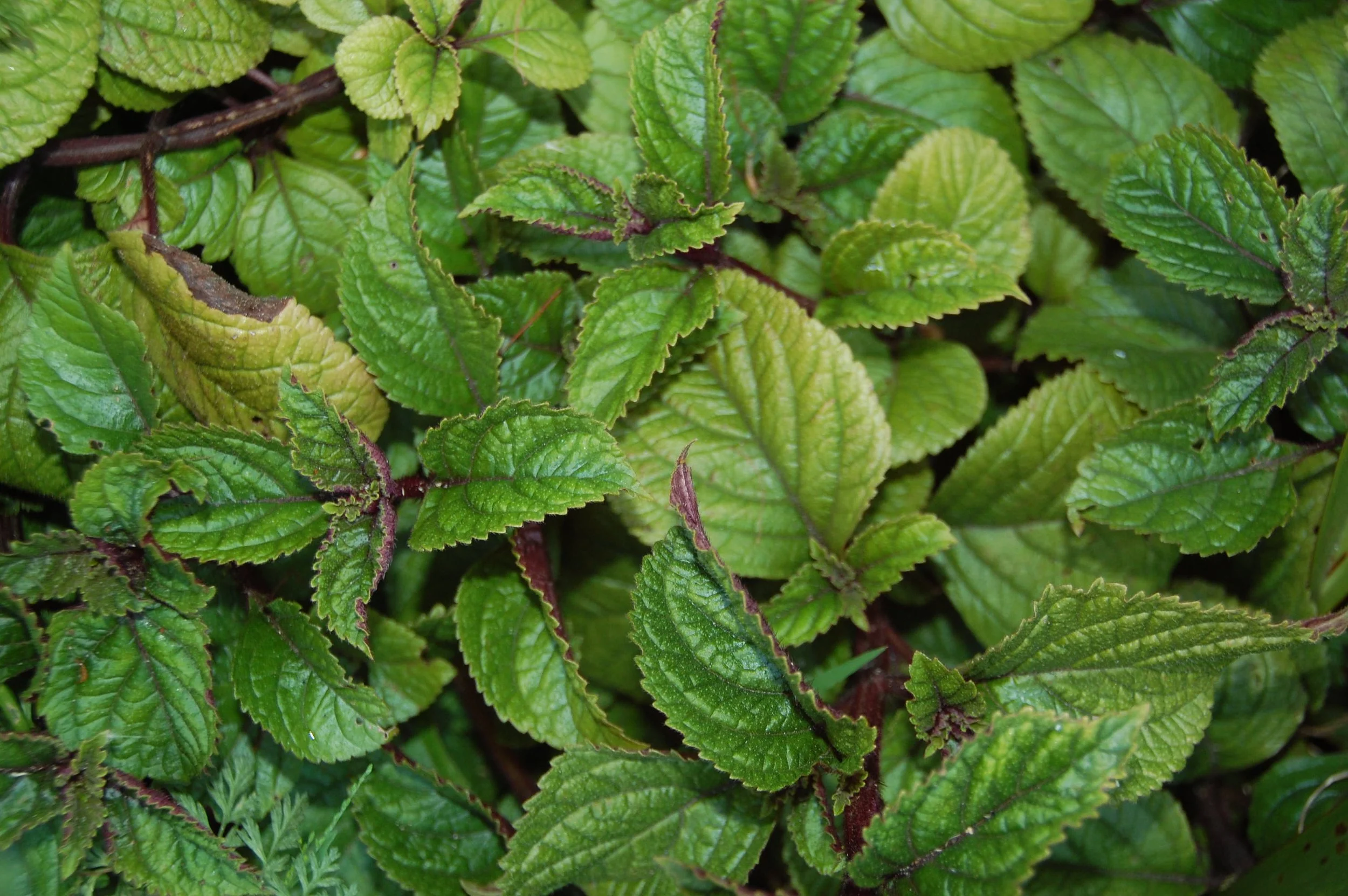
Plectranthus ciliatus is a trailing or slightly upright plant with stems covered in purple hairs that form runners and root at nodes. Strongly textured leaves (5-12 cm long) with serrated edges are purple underneath. White tubular flowers with purple dots form on erect stems. It forms dense mats that smother and kills native plants and prevents seedlings from establishing.
Plectranthus ecklonii is an erect shrub (up to 3 m tall) with young stems covered in short, fine hairs. It has oval leaves (6-17 cm long) that are irregularly serrated along the edges. The leaves are also covered with short fine hairs and dotted with red glands. Erect flowerhead spikes are covered in small, tubular, purplish-blue violet flowers.
There are two more Plectranthus species that are weeds in NZ; Plectranthus grandis and Plectranthus mahonia.
Control options:
Pull up and dispose in weed bins
Spray with glyphosate (360 g/L strength) (mix 10 ml per litre of water and add penetrant).
For the larger Plectranthus ecklonii the stems can be cut and stumps painted with glyphosate (360 g/L strength)(mix 200 ml per litre of water and add penetrant).
-
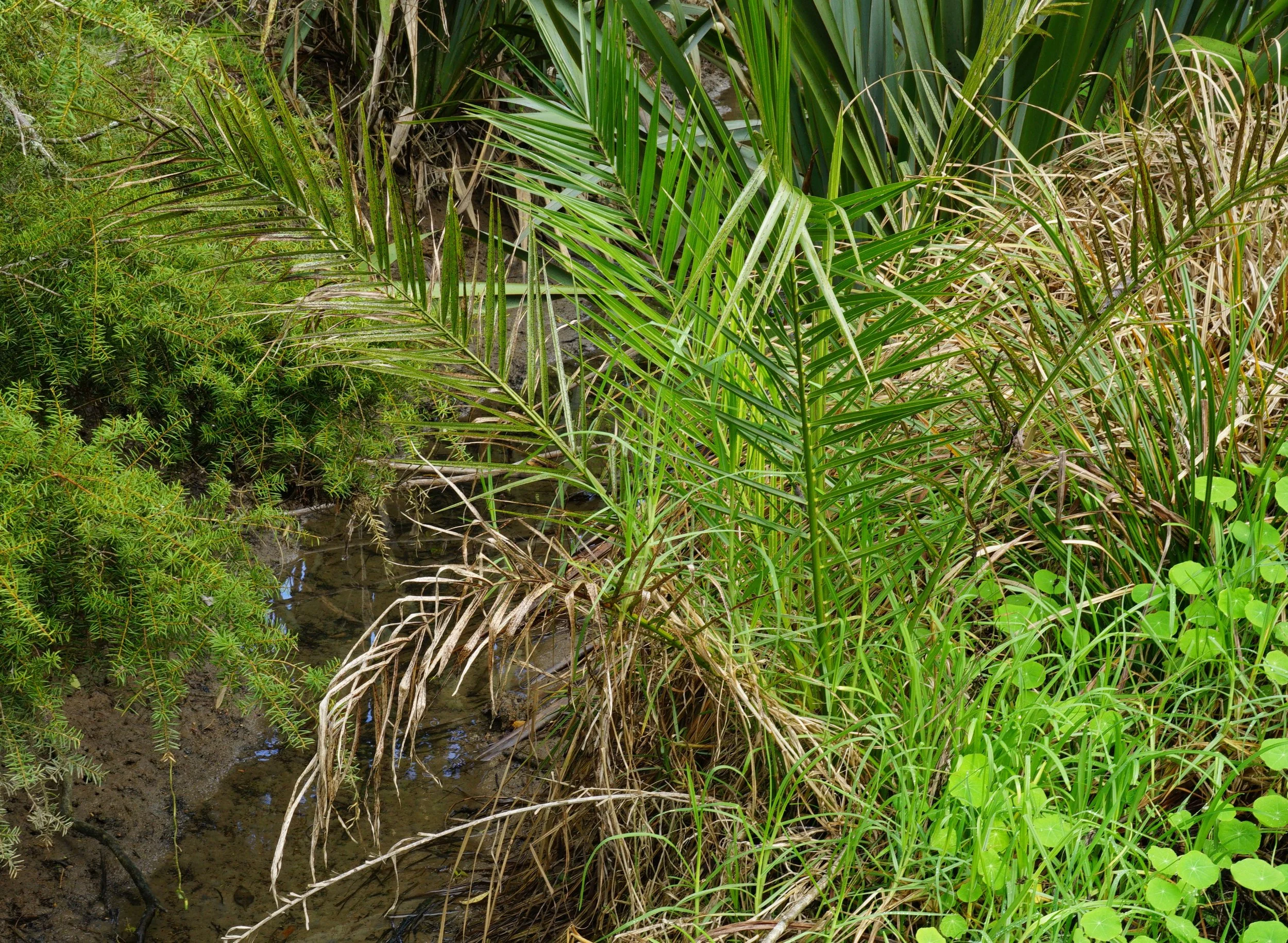
The Phoenix Palm is a serious pest plant. It spreads rapidly, displaces native species and its spines pose a serious risk, especially to children. They are popping up in gardens, along roadsides and under tall native forest throughout Laingholm. Phoenix palms form a degraded element to landscapes in many countries, and in New Zealand they especially undermine a sense of what is unique to this land.
Wildling Phoenix Palms are creating an increasing health issue because people are in danger of injury from their spines. They cause a significant proportion of foreign body injuries in New Zealand requiring surgery (Adams et al. 2000). For example, of the 250 children admitted to Starship Children’s Hospital over a five-year period with foreign body injuries, 21 (8.4%) were caused by Phoenix palms. Fracturing and fragmentation of the barbs often occurs resulting in multiple surgical procedures to remove the foreign material. Septic arthritis has also been caused by Phoenix-palm injury. Starship Hospital surgeons warn against having Phoenix palms in positions where young children can encounter them. Please get to rid of them from your property and neighbouring properties.
Control options:
Dig out small plants and dispose of stems and roots in a weed bin.
Spray small plants with glyphosate (360 g/L strength) (mix 20 ml per litre of water and add penetrant).
If they are relatively small but nonetheless have a trunk, cut down at the base and treat stump with Glyphosate (360 g/L strength) using a high concentration (mix 250 ml per litre of water or use undiluted).
Large palms with large trunks can be killed by drilling holes and filling with undiluted glyphosate. Drill holes at least 10 cm deep, every 10 cm around the trunk, angled down at about 45 degrees, near the ground. Or drill 4 to 5 much deeper (30-40 cm) holes. The diameter of the hole is not too important but about 11 cm diameter is good.
-
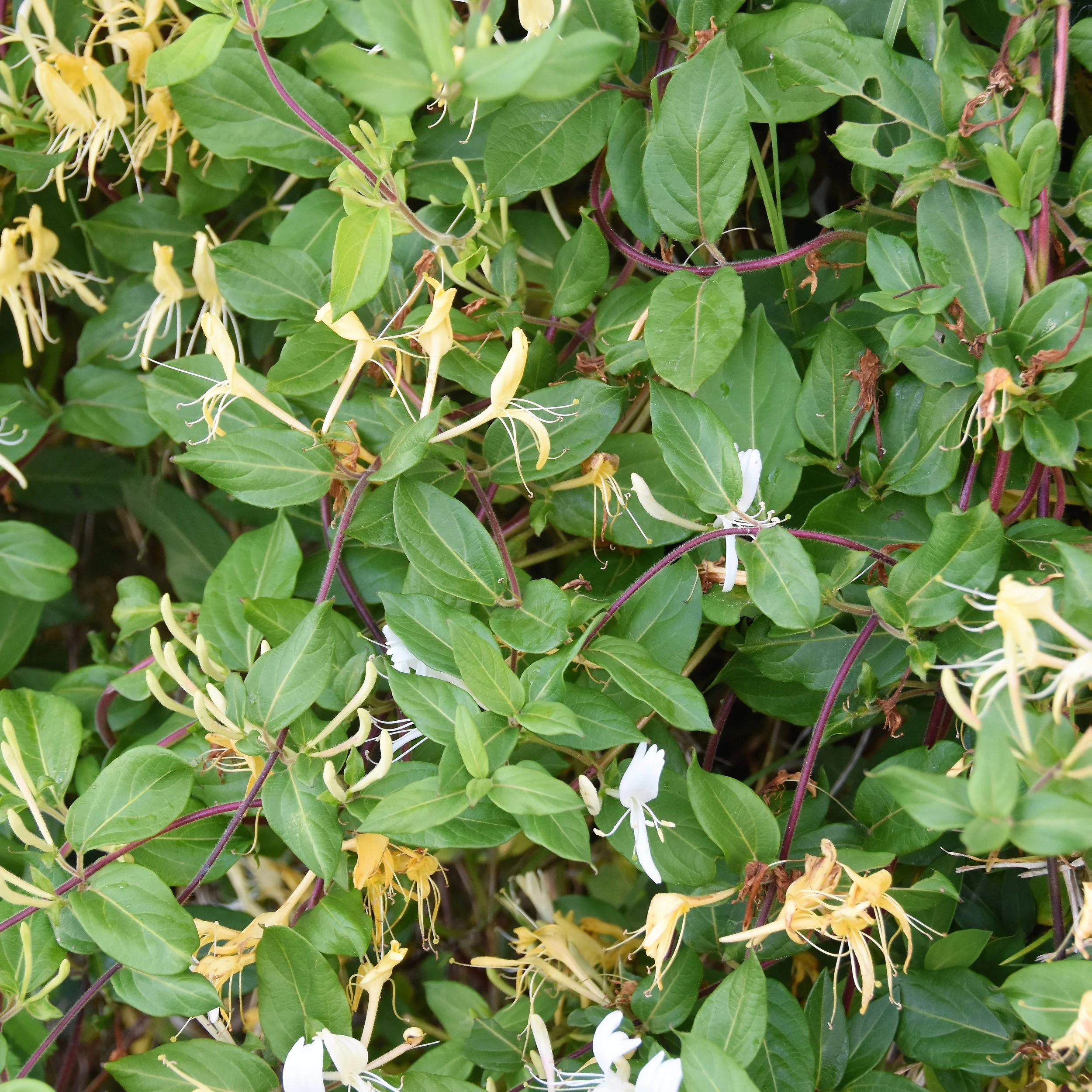
Japanese Honeysuckle forms dense, long-lived masses. It has very long stems that take root wherever they come in contact with the soil. It is fast growing and will quickly smother small trees ultimately causing tree canopy collapse. It tolerates moderate shade and will grow in any soil. It is mainly spread by birds and dumped vegetation. The flowers have a sweet smell.
Control options:
Dig out small plants and dispose of roots and stems in a weed bin. Any stems left lying on the ground will take root and quickly regrow.
Cut stems near the ground of larger plants and paste both ends of cut stems with Cut ‘n’ Paste Metsulfuron-methyl. Leave vines in trees to die.
Cut the vines at a convenient height and spray the regrowth (best summer or spring) with glyphosate (360 g/L strength) (mix 10 ml per litre of water and add penetrant.
Spray foliage with glyphosate (360 g/L strength) (mix 10 ml per litre of water and add penetrant).
-
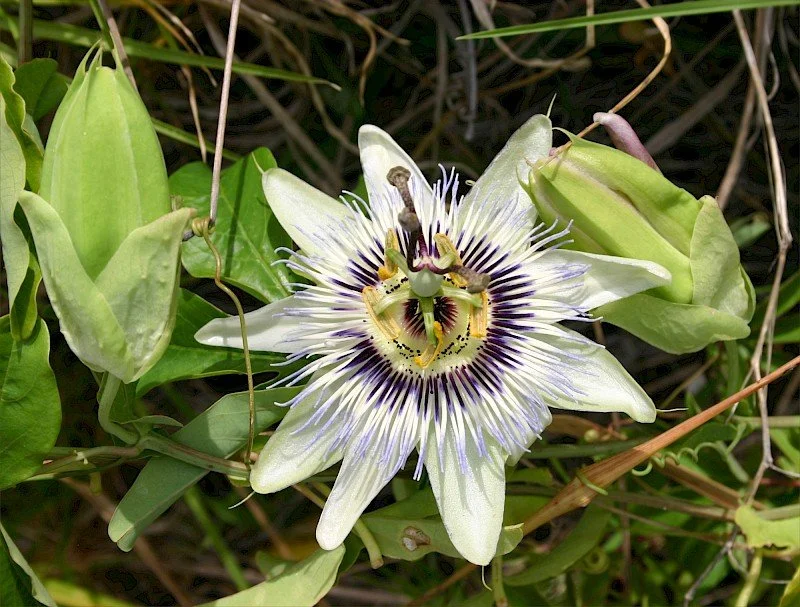
Vigorous, high-climbing vine reaching up to 6 m into the canopy of trees. It has long, thin stems that are angular when young and which have spiralling tendrils. Leaves are 5-lobed. Its flowers are white-purple (6-9 cm diameter) with purple filaments and are followed by hanging round fruit (3-5 cm diameter) that ripens from green to yellow. It smothers canopy trees and prevents the establishment of native seedlings. Seeds are spread by birds and possums.
Control options:
Dig out scattered plants. Dispose of plant material at a refuse transfer station or weed bin.
Cut and paste the stem close to the ground and cover the entire stump as soon as possible after cutting with metsulfuron-methyl METGEL CUT “N” PASTE, or Picloram cut “n” paste, or cut “n” paste bamboo buster.
Spray foliage with Triclopyr (600 g/L strength) (mix 6 ml per litre of water and add 2.5 ml/L penetrant). Note: Triclopyr overspray will kill native broadleaf plants.
-
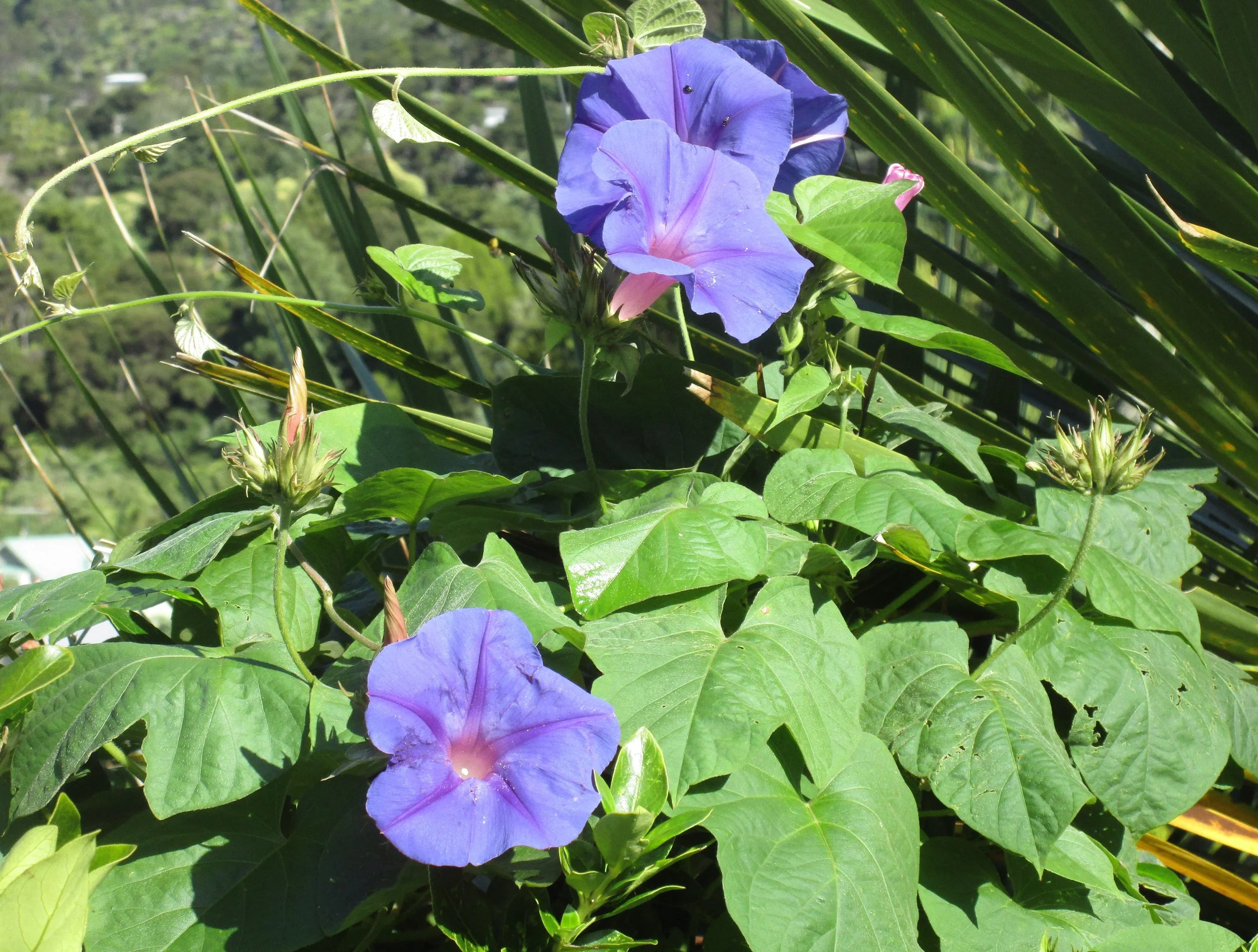
Very fast-growing climbing vine. Leaves (5-18 cm) are usually 3-lobed and hairy underneath. It produces round blue-purple flowers that are pink at the base. It is long-lived and forms a dense, smothering masses over large areas that can reach the top of native canopy trees and killing them. It spreads by creeping stems and stem fragments in dumped vegetation.
Control options:
Dig out roots and dispose of at a refuse transfer station or weed bin.
Cut the stem as close to the ground as possible and paste with metsulfuron METGEL CUT “N” PASTE.
Spray the foliage with Metsulfuron-methyl (600 g/kg strength) (mix 0.5 g (approximately 1 ml of granules) per litre of water and add penetrant). If you are spraying foliage with Metsulferon you need to be careful as it can kill other plants through their leaves and through their roots. Treeferns are particularly vulnerable to poisoning through roots.
-
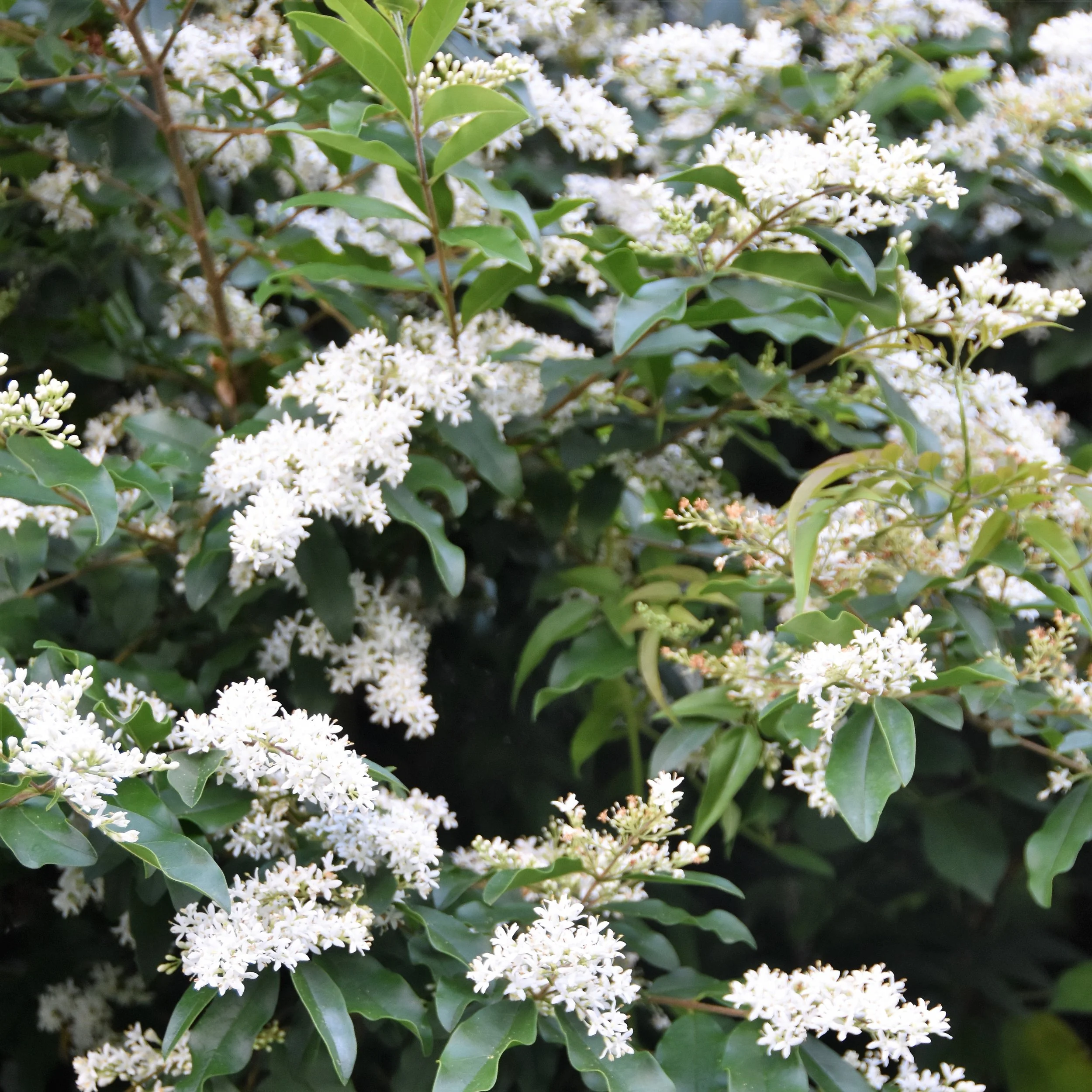
Chinese Privet is a small tree with distinctive warty lumps on stems. It has oval, dull green leaves (2.5-6 cm long) that sometimes have wavy edges. It has drooping clusters of small, very fragrant, white flowers, followed by round, green berries that mature to dull purplish-black. It produces many highly viable seeds that are dispersed over large distances by birds.
Large-leaved Privet (also called tree-privet) is a tree that also has lumpy warts on the stems. It has large (5-13 cm long), dark green, elliptical-shaped, leaves that are glossy on the top.
Both species can establish under native forest creating dense stands that kill off and replace native canopy trees and shrubs, and they both prevent the establishment of native seedlings. Their berries are poisonous and may impact on native fauna, especially insects and they have adverse impacts on people’s health, especially for people with asthma.
Control options:
Pull or dig out small pants and leave on site to rot down.
Cut and paste larger plants immediately after cutting with metsulfuron-methyl METGEL CUT “N” PASTE, or Bamboo Buster. If the trees begins to regrow cut the stem again and re do the herbicide paste.
Drill holes of approximately 1 cm diameter and 5 cm deep at a downward angle of about 45 degrees. Drill one hole every 20 cm around the trunk base and fill with undiluted glyphosate.
-
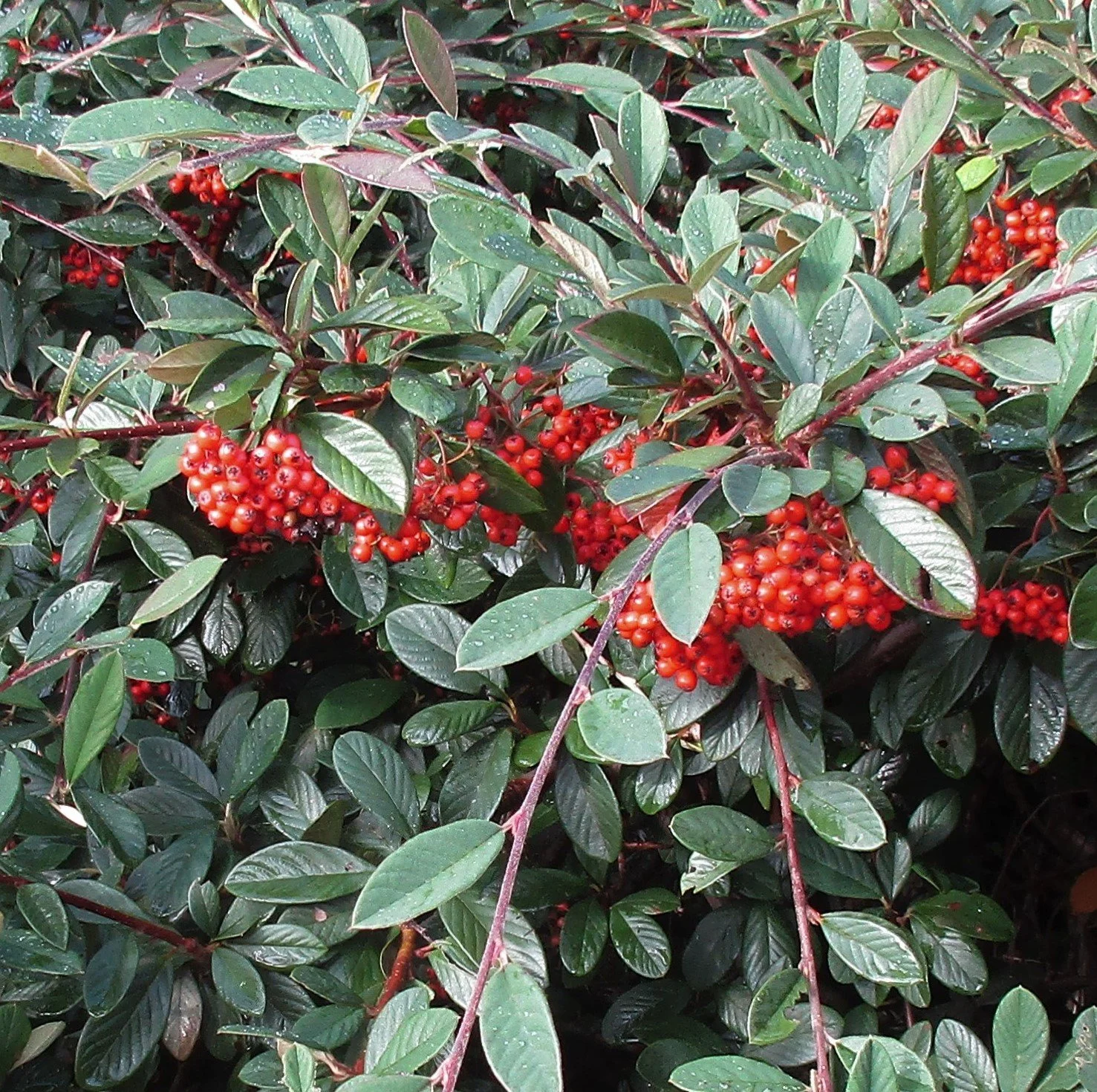
There are several species of Cotoneaster in New Zealand that look very similar and are pests. Cotoneaster speciesproduce highly viability seed, grow rapidly, and form dense stands that are long-lived. They outcompete native species in wide range of habitats including wet or dry sites, on the coast. They are also semi-shade tolerant.
Control options:
Dig out small plants and dispose of roots and stems in a weed bin. Any stems left lying on the ground will take root and regrow.
Cut and paint stumps with metsulfuron-methyl METGEL CUT “N” PASTE, or picloram cut “n” paste gel. Treat cut ends of any branches left on the ground
Spray the foliage with Metsulfuron-methyl (600 g/kg strength) (mix 0.5 g (approximately 1 ml of granules) per litre of water and add penetrant). If you are spraying foliage with Metsulferon you need to be careful as it can kill other plants through their leaves and through their roots. Treeferns are particularly vulnerable to poisoning through roots.
-
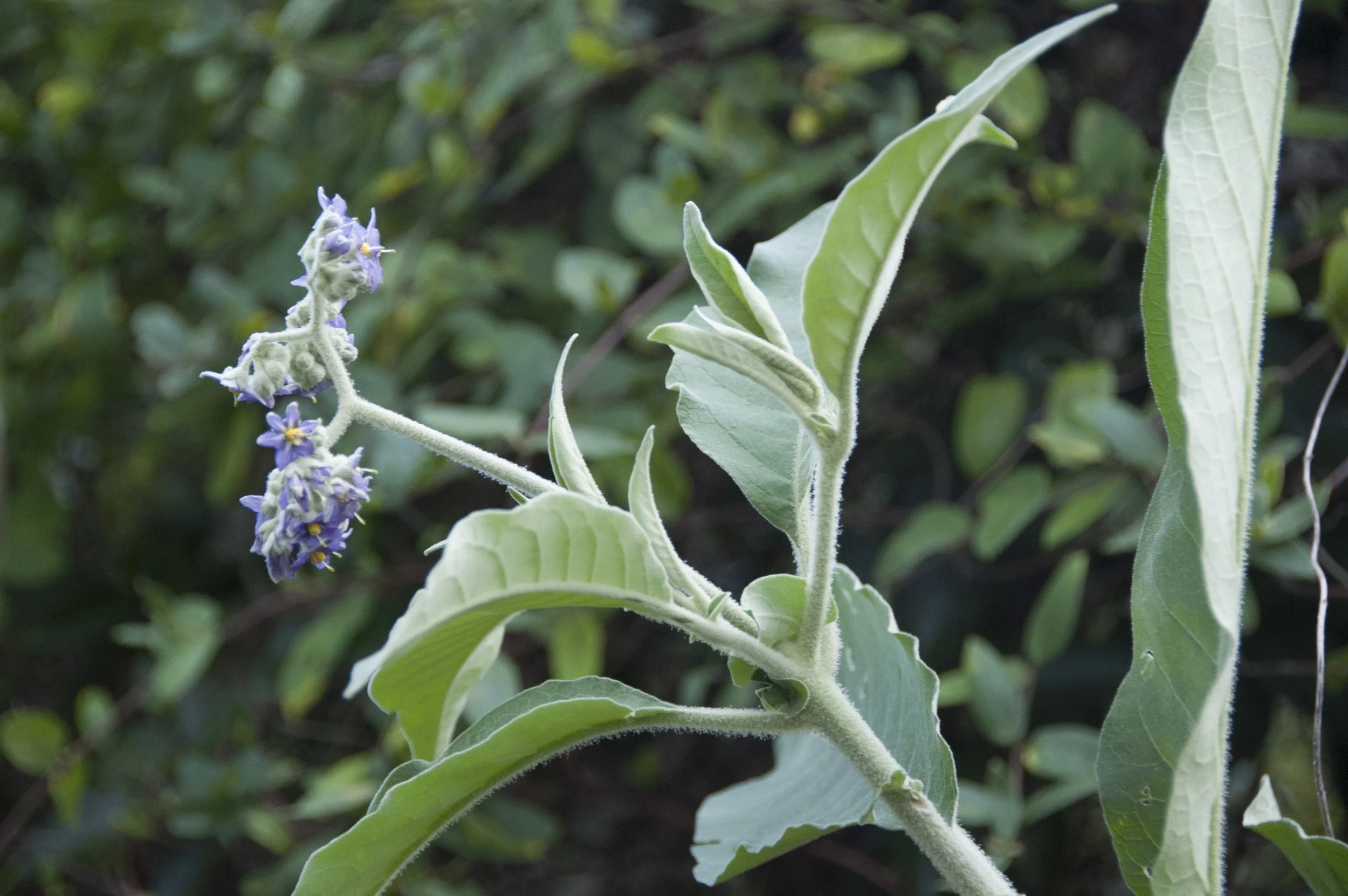
Other names: Tobacco weed, flannel-leaf, kerosene plant, Solanum auriculatum
Woolly Nightshade matures rapidly, forming dense stands and it produces many well-dispersed seeds. All parts of the plant are covered in dusty hairs, and it has whitish, branching, soft-woody stems and oval, grey green leaves (10-35 x 3-15 cm) with whitish undersides.
Woolly Nightshade produces toxins that poison the soil and inhibit native plant regeneration. The fine hairs on its leaves and stems, that are shed when brushed or touched, can also be an irritant to some people and cause respiratory problems. The berries are toxic to people (especially children).
Control options:
Pull up small plants. Leave on site to rot down.
Fell larger plants and paint stumps with Picloram cut “n” paste gel, or a product containing Triclopyr (600 g/L strength) (E.g. Grazon) (mix 100 ml per litre of water).
Drill and fill larger plants with Picloram cut “n” paste gel or triclopyr (600 g/L strength) (mix 100 ml per litre of water). Drill holes of approximately 1 cm diameter and 5 cm deep at a downward angle of about 45 degrees. Drill one hole every 5 cm around trunk.
Spray foliage with Triclopyr (600 g/L strength) (mix 6 ml per litre of water). Note this method should only be used if there is little risk of spray drift onto native plants.
-
Pampus (sometimes called cutty grass) and our native toe toe are often confused. There are two invasive species (Cortaderia jubata and Cortaderia selloana). There are four native species on mainland New Zealand plus one endemic to the Chatham Islands, but the native species that grows locally is Austroderia fulvida.
Pampus forms large clumps, usually 2-3m high. It can be distinguished from the native species by having one conspicuous leaf midrib, without secondary veins between the midrib and leaf edge ─ all the native species have secondary veins on both sides of the midrib. Pampus also has dead leaf bases that spiral like wood shavings, whereas the native species do not. Pampus has erect, dense, fluffy, white-pinkish flowerheads (January to June) that fade to a grey-white as seed forms. The flowers of the native toe toe vary among the species but the one that grows in the Waitakere Ranges has pendulous graceful flower stalks and light golden-yellow flowerheads (September to January).
Control options:
Dig out small plants.
For large plants, cut them down as close to the base as possible and then spray the stumps with glyphosate (360 g/L strength) (mix 300 ml per litre of water and add penetrant). This method minimises spray drift and is more effective than spraying the leaves.
Spray leaves with glyphosate (360 g/L strength) (mix 10 ml per litre of water and add penetrant).